Short-Cycling AC: What Rapid On-Off Means for Your Comfort and Cooling Bill
Putting the Checks in Order
Work through the list in the sequence above, from the fastest free checks to the ones that need a professional. Confirm the thermostat mode and fan setting, check the filter and vents, look at the outdoor unit and breaker, then check for ice on the indoor coil. If none of that clears it, a diagnostic visit will tell you more in a few minutes than another day of guessing.
Quick Answer: Short cycling means your air conditioner turns on, runs for just a few minutes, then shuts off again and again instead of completing a full cooling cycle. In North Texas, the most common causes are an oversized unit, a clogged air filter, low refrigerant, a poorly placed thermostat, or a failing electrical component like a capacitor. Left alone, it drives up energy use, leaves the house sticky even when the thermostat says it's cool, and wears down the compressor faster than normal operation would. A working AC typically runs for at least several minutes per cycle; anything shorter, repeated over and over, is worth a real diagnostic look.
You notice it standing in the kitchen. The unit kicks on, you hear the outdoor fan spin up, and before the room even starts to feel different, it shuts off again. A few minutes later it starts right back up. By the third or fourth time in an hour, you're not imagining things. Your air conditioner is short cycling, and it's telling you something is wrong even if the house still feels roughly the same temperature.
A healthy central AC runs in cycles lasting somewhere around 15 to 20 minutes, long enough to pull heat out of the air and strip out humidity along with it. Short cycling compresses that down to a few minutes or less, and the system restarts far more often than it should. It's one of those problems that's easy to shrug off in July, when the AC running nonstop already feels normal. We hear about it most during the string of 100-degree afternoons that stack up every August, right when homeowners are least inclined to question a unit that's clearly working hard.
But rapid on-off cycling isn't the same as a system working hard. It's a system fighting itself.
What Short Cycling Actually Sounds and Feels Like
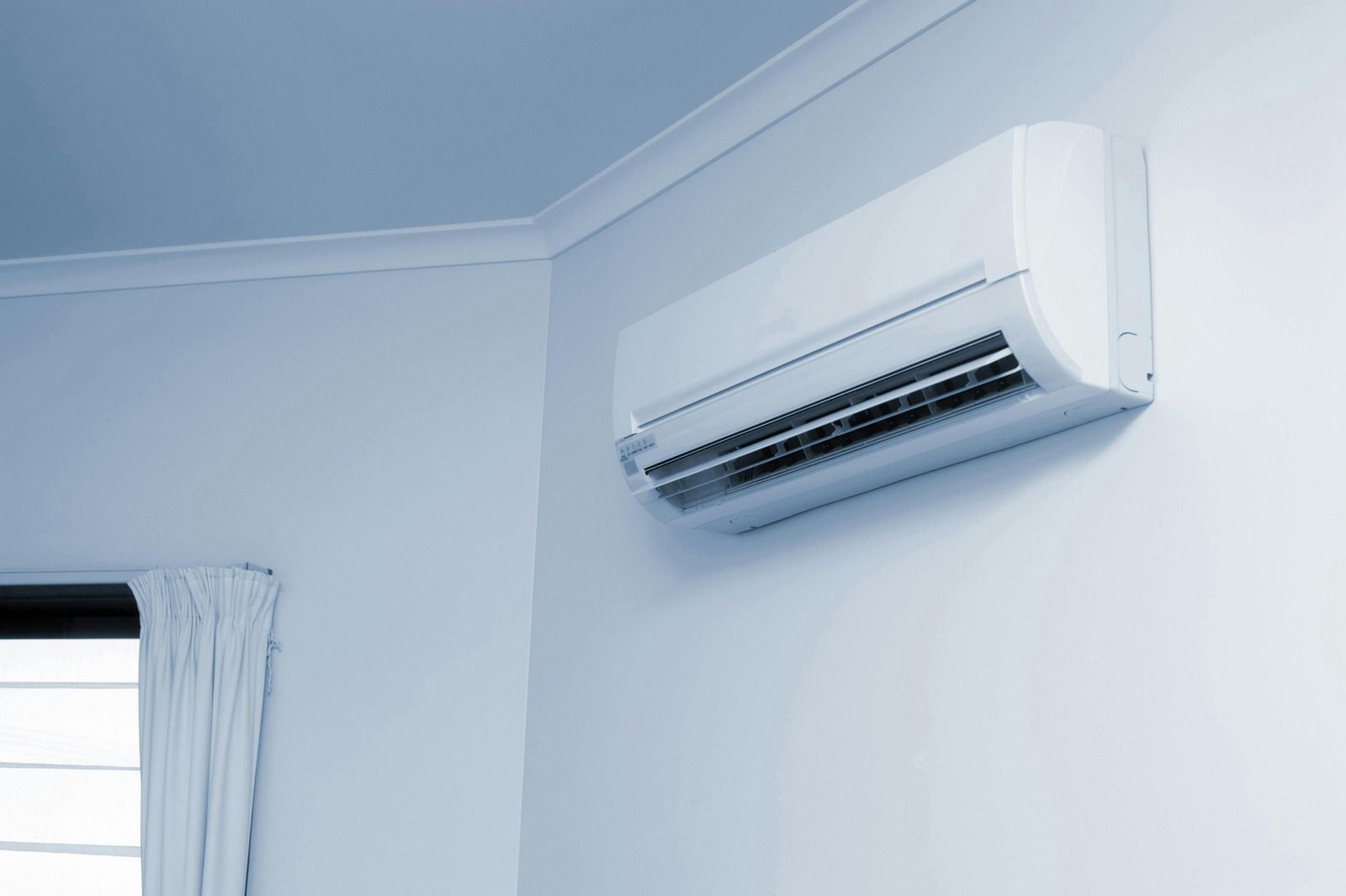
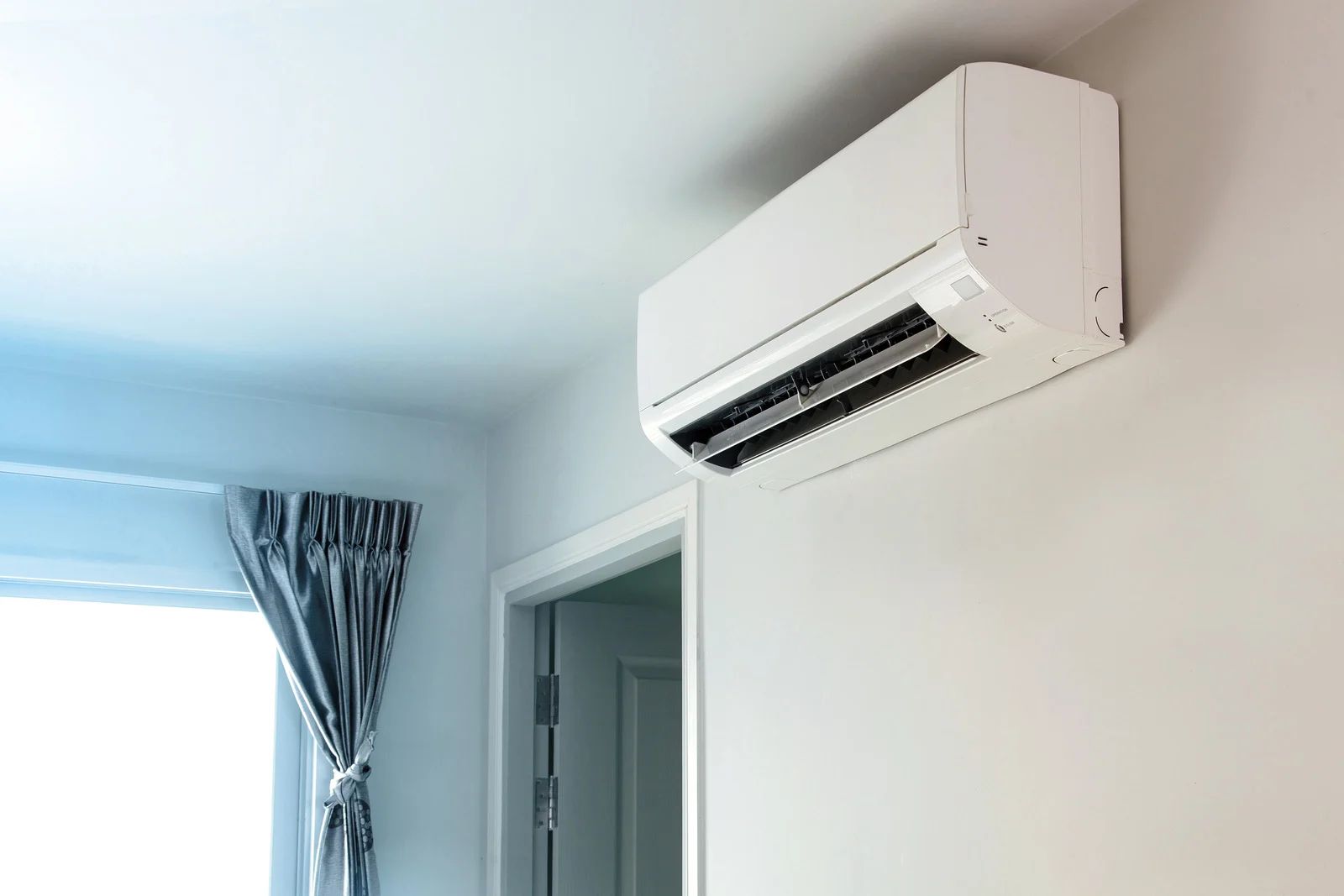
Most homeowners catch this by ear before they catch it any other way. The compressor and outdoor fan kick on, run for two or three minutes, then go quiet. Ten minutes later, sometimes less, the cycle repeats. You might also notice the indoor air handler clicking through the same pattern, blowing cold air in short bursts rather than a steady stream.
The house often feels muggier than the thermostat number suggests. That's not a coincidence. A full cooling cycle does two jobs at once: it lowers the air temperature and it condenses moisture out of the air as it passes over the cold evaporator coil. Cut the cycle short again and again, and the temperature might land close to your setpoint while the humidity stays high. That clammy, not-quite-comfortable feeling during a Texas summer, even with the AC seemingly running plenty, is a classic short-cycling symptom.
Why This Happens So Often in North Texas Homes
An Oversized System Cools Too Fast For Its Own Good
This is the common cause, often traced to installation. An oversized unit cools the house too quickly, satisfying the thermostat before running long enough to remove humidity. It shuts off, temperature rises quickly, and the system restarts repeatedly, creating short cycles that strain equipment during extreme North Texas summer heat.
A Dirty Filter Chokes The Airflow The System Needs
Pollen and fine Texas dust can clog filters faster than expected. Restricted airflow makes the evaporator coil run too cold, triggering a safety control that shuts down the compressor to prevent icing. After warming slightly, the system restarts, then shuts off, creating cycles and reducing cooling performance during demand.
Low Refrigerant Throws Off The Whole Cycle
Low refrigerant, usually caused by a leak in the line set or coil, prevents the system from absorbing heat properly. The resulting imbalance can trigger protective shutoffs similar to those caused by restricted airflow. Diagnosing refrigerant problems requires proper gauges, equipment, and training, so homeowners should not attempt it themselves.
Thermostat Placement Or A Bad Sensor Sends The System False Signals
A thermostat near a supply vent, window, lamp, or appliance can read the temperature incorrectly. It may sense that the target temperature has been reached before the room cools, shutting the system down prematurely and restarting when the sensor temperature changes enough to call for cooling during a cooling cycle.
A Worn Or Failing Capacitor Cuts Power To The Compressor Intermittently
A capacitor may prevent the compressor or fan motor from starting and running smoothly. The compressor can stutter, stall, or drop out during a cycle, making the system appear to rapid cycle randomly. What seems like a thermostat problem may actually be an electrical component approaching failure and requiring replacement.
Tip: Before calling anyone, check the filter. Pull it, hold it up to a light, and if you can't see light through it, replace it. In North Texas, a one-inch filter often needs changing every 30 to 45 days during peak pollen and dust season rather than the 60-to-90-day window that works in milder climates. It's a five-minute fix that rules out the simplest cause first.
What Rapid Cycling Costs You Beyond the Thermostat Reading
Every time a compressor starts, it draws a heavy surge of electricity, well above what it needs once it's running steadily. A system that starts and stops a dozen times an hour spends a disproportionate share of its runtime in that expensive startup phase instead of settling into efficient operation. The practical result is a system that uses meaningfully more energy to deliver less actual cooling and dehumidification than one running normal, longer cycles.
There's a mechanical cost too, and it compounds. Compressors and fan motors are built to handle a certain number of start cycles over their lifespan, not an unlimited number crammed into a shorter window. Constant starting and stopping stresses windings, bearings, and electrical connections in a way steady operation never does. Rather than one problem to fix, short cycling tends to be the accelerant that turns several years of remaining equipment life into one or two rough summers before something fails outright.
And then there's comfort, which is really the whole point of having a system at all. A house that never quite dehumidifies properly during a long Texas cooling season doesn't just feel sticky. It can leave you fighting condensation on windows and that faint mustiness in closets and bathrooms that shows up when moisture never fully leaves the air.
When Short Cycling Signals a Bigger Problem
Not every case of short cycling is a five-minute filter swap. If you've already checked the filter and the pattern keeps up, or if you're hearing new noises alongside the rapid restarts, buzzing, clicking relays, or a hum that doesn't resolve into a running compressor, that combination points toward electrical or refrigerant issues rather than airflow. Ice forming on the indoor coil or the outdoor line is another sign worth taking seriously, since it usually means the system has already tripped a safety control at least once..
Warning: Never keep resetting a breaker that trips repeatedly on a short-cycling system, and don't keep manually restarting a unit that's shutting itself off. Both are signs the equipment is protecting itself from a fault. Continuing to force it to run can turn a repairable component failure into a full compressor replacement.
What a Real Diagnostic Visit Actually Checks
Tracking down the cause of short cycling isn't a single test. It starts with a runtime and cycle-length check to confirm what's actually happening rather than relying on memory of how often it seemed to kick on. From there, a proper diagnostic covers the electrical side, capacitor readings and contactor condition, alongside the mechanical side: refrigerant charge and airflow across both the indoor and outdoor coils.
Thermostat placement and calibration get checked too, since it's an easy thing to overlook and an easy one to fix once it's found. And for a system that's cycling short because it was sized wrong on day one, the honest answer sometimes isn't a repair at all. A load calculation for the actual house, rather than a guess based on square footage alone, is the only way to know whether the unit fits the home it's cooling.
Quick Answer: Warm air from the vents during a heat wave usually traces back to one of a handful of causes: a thermostat set wrong or its fan switched to "on," a filter so clogged it has choked off airflow, an outdoor condenser unit that isn't running at all, a frozen indoor coil blocking airflow, low refrigerant, or a failed compressor. The first three are things you can check yourself in a few minutes. The last three usually need a technician, and running the system while ice is building on the coil or the compressor is straining can turn a repair into a replacement. Work through the checks in order, and you'll either solve it on the spot or know exactly what to tell whoever comes out.
You reach for the thermostat expecting relief and instead feel lukewarm, barely-moving air. Outside it's pushing triple digits, the kind of North Texas afternoon where an air conditioner has no business taking a break. Before you assume the worst, there's a short list of things worth checking, because more than one of them has nothing to do with a failing system and everything to do with a switch in the wrong position or a filter that's overdue.
What Low Refrigerant Actually Looks Like
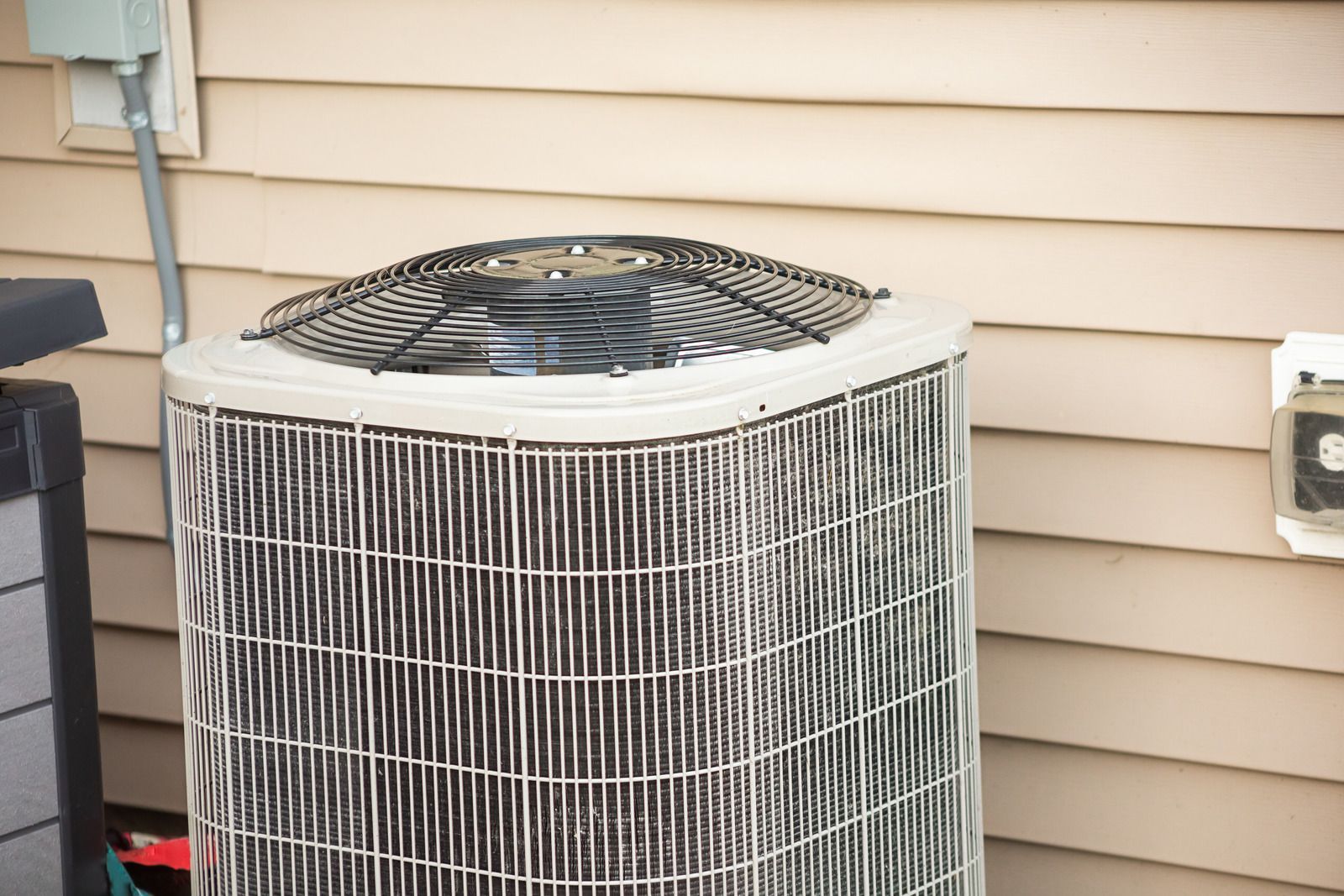
The outdoor unit, the condenser, does the heavy lifting of rejecting heat from your home into the outside air. If it isn't running, nothing your indoor system does will produce cold air, no matter how clean the filter is. Stand near the unit and listen. You should hear the fan spinning and feel warm air blowing off the top. If the unit is silent, or if the fan is trying to turn but stuttering, that points toward an electrical problem rather than a refrigerant one.
A failed run capacitor is one of the more common reasons a condenser fan won't start, especially after the unit has logged hundreds of hours of runtime through a long cooling season. The capacitor gives the motor the jolt it needs to get spinning, and when it weakens, the fan can hum without turning or fail to start altogether. This isn't something to test or replace yourself, since the capacitor stores an electrical charge even when the unit is off, but recognizing the symptom, a humming or silent condenser with a warm coil, tells a technician exactly where to start.
Before assuming a bigger problem, check your breaker panel and any disconnect switch near the outdoor unit. A tripped breaker or a disconnect that got bumped or accidentally left off after previous service will stop the condenser cold and produce warm air throughout the house, with a fix that takes seconds once you spot it.
Refrigerant doesn't get "used up" the way fuel does. If a system is low, it's because it's leaking somewhere in the line set, the coil, or a connection, and it will keep getting lower until the leak is found and sealed. Low refrigerant produces a fairly recognizable pattern: weak or warm airflow that gradually worsens over days or weeks, ice on the indoor coil or the refrigerant line, and a system that runs longer than it used to without reaching the setpoint. It's a different pattern than the sudden warm air you get from a tripped breaker or a dead capacitor, since it tends to creep rather than hit all at once.
Confirming a refrigerant issue requires gauges and training a homeowner won't have on hand, so this is one of the checks you observe rather than diagnose yourself. What you can do is note when the warm-air problem started, whether it came on gradually or all at once, and whether you've noticed hissing or bubbling sounds near the indoor or outdoor unit, since that detail alone can point a technician toward a leak location faster.
Frequently Asked Questions
Is it normal for an AC to turn on and off a lot on the hottest days?
No. More frequent cycles overall are normal in extreme heat, but each cycle should still run several minutes. Repeated one or two minute cycles point to a cause worth checking.
Can a bad thermostat really cause short cycling on its own?
Yes. A miscalibrated, sun-exposed, or poorly located thermostat reads the room wrong and shuts the system off early. Relocating or replacing it resolves the cycling without touching the AC unit itself.
How do I know if my system is oversized versus just working hard in the heat?
An oversized system cools fast, shuts off quickly, and leaves air feeling damp despite a lower temperature. A correctly sized system runs long cycles and keeps humidity in check throughout.
Does short cycling always mean the compressor is failing?
Not always. A dirty filter or thermostat placement can cause short cycling without compressor damage yet. But cycling that continues after ruling out simple causes puts real stress on it.
Will changing the filter more often fix short cycling for good?
It fixes cycling when a dirty filter caused it, which is common in heavy pollen season. If it continues on a fresh filter, the cause is refrigerant, electrical, sizing, or thermostat related.
Can short cycling happen with a heat pump in the winter too?
Yes. The same oversizing, airflow, electrical, and thermostat issues causing summer short cycling can affect a heat pump during a North Texas cold snap. The diagnostic approach stays the same.
Catching Short Cycling Before It Costs You More
Rapid on-off cycling is never just a quirk to live with through another North Texas summer. Whether the cause is a clogged filter, an oversized unit, or a capacitor nearing failure, the pattern points to a system working against itself instead of cooling efficiently. Left unaddressed, it drives up bills, leaves rooms sticky despite a cool thermostat reading, and pushes mechanical wear onto components that were never built to start and stop that often.
A proper diagnostic settles the question instead of guessing at it, checking electrical, refrigerant, and airflow components together rather than one at a time. Moore Comfort Care Heating and Air Conditioning
has spent 30
years diagnosing and
repairing HVAC systems
across Midlothian, TX, treating short cycling as a signal worth tracing to its real cause rather than a symptom to reset around every time it happens.