Is Your AC the Right Size for a North Texas Summer? Signs It's Too Big or Too Small
Putting the Checks in Order
Work through the list in the sequence above, from the fastest free checks to the ones that need a professional. Confirm the thermostat mode and fan setting, check the filter and vents, look at the outdoor unit and breaker, then check for ice on the indoor coil. If none of that clears it, a diagnostic visit will tell you more in a few minutes than another day of guessing.
Quick Answer: An air conditioner that is the right size runs in long, steady cycles, holds your thermostat setting on the hottest afternoons, and leaves the air dry instead of clammy. A unit that is too big cools fast, shuts off early, and leaves humidity behind. A unit that is too small runs nonstop and still falls behind when the heat peaks. The only reliable way to know is a room by room load calculation of your actual house, not a square footage guess. If your comfort swings from room to room or your system never seems to rest, size is one of the first things to check.
It is 5:30 on an August evening in Midlothian, the thermostat says 74, and the house still feels like a damp towel. The AC just clicked off after six minutes. Twenty minutes later it clicks back on, blows hard for a few minutes, and quits again. Your neighbor's house, built the same year with nearly the same floor plan, feels fine. Nothing looks broken, so you start to wonder what is different.
More often than people expect, the answer is size. Capacity is the one thing a homeowner rarely gets to see, because it is stamped on a data plate behind the unit and decided years ago by whoever installed it. After three decades working on systems across Midlothian, Waxahachie, Mansfield, and the towns around them, we can tell you that the wrong size causes more everyday frustration than almost any single failed part.
What Right Size Actually Means in a North Texas Home
Air conditioner capacity is measured in tons, and one ton equals 12,000 BTUs of heat removal per hour. That number has nothing to do with the weight of the equipment. It describes how much heat the system can pull out of your house in an hour, and the goal is to match that number to how much heat your house actually gains on a hot day.
Heat Gain Is Not The Same In Every House
Ceiling height, insulation, window area, orientation, wall tightness, and occupancy all affect cooling needs. Two homes with identical square footage can require very different air conditioner capacities because their heat loads differ.
The Goal Is Long, Gentle Cycles
A properly sized system should run for extended periods on hot days. Longer cycles gradually mix room air, reduce drafts, and give the indoor coil enough time to remove moisture effectively.
Humidity Is Half The Job
An air conditioner does more than lower temperature. It also removes moisture. During humid North Texas summers, inadequate dehumidification can leave a home feeling cool but uncomfortable, with noticeably sticky indoor air.
Bigger Is Not Safer
Oversizing has long been common in residential cooling. A Texas field study found average sizing near one ton per 588 square feet, while accepted criteria often allow roughly 800 to 900 square feet per ton.
Signs Your AC Is Too Big
An oversized system satisfies the thermostat before it has done the rest of its work. Because the unit is so powerful, it drops the air temperature near the thermostat quickly and shuts off, leaving walls, furniture, and humid air behind.
Short Cycles That Repeat All Afternoon
If your system runs briefly, stops, then starts again before the house settles, capacity may exceed demand. Frequent starts increase energy use and equipment wear.
A Cold But Clammy Feeling
Cool air can still feel muggy when an oversized system removes temperature faster than moisture. Tacky furniture, fogged windows, and damp bathrooms can indicate inadequate dehumidification.
Big Temperature Swings Between Rooms
Oversized systems can push substantial airflow through ducts designed for smaller equipment. Nearby rooms may receive excessive cooling while distant rooms receive insufficient airflow before the system shuts down.
Musty Smells And Mildew Spots
Persistent humidity can make closets, window corners, and cabinet backs smell musty. Moisture combined with household dust and pollen can create conditions that encourage mildew growth.
A Thermostat You Keep Lowering
When indoor air feels sticky, lowering the thermostat may seem helpful. However, this can increase cycling without addressing excessive humidity, leaving the underlying comfort problem unresolved.
Loud Starts
A noticeable thump or strong rush of air when the system starts can indicate substantial equipment and airflow activity. If it becomes quiet within minutes, repeated cycling deserves attention.
One more detail worth knowing is that oversizing is not always the original installer's fault in a simple way. A home that gained new insulation, a sealed attic, better windows, or duct repairs may now need less cooling than the unit was chosen to deliver. A system that was a fair match fifteen years ago can be too large today.
Signs Your AC Is Too Small
The opposite problem is easier to feel and harder to ignore. An undersized system is working honestly and still losing the argument with the sun.
It Runs Almost Nonstop On Hot Days
Long cycles are normal, but nonstop operation with an unreached thermostat setting suggests the system may lack sufficient capacity.
The House Gets Warmer As The Afternoon Goes On
If indoor temperatures rise throughout the afternoon despite continuous cooling, the system may be reaching its capacity limit.
Upstairs Rooms Never Catch Up
Persistent upstairs temperature differences can indicate increased heat gain from the roof and rising warm air exceeding available cooling capacity.
Rooms Added Later
Sunrooms, converted garages, and finished attics add cooling loads without necessarily adding equipment, potentially leaving the original system undersized.
Long Recovery After The House Is Opened Up
If your home stays hot for hours after open doors or gatherings, the system may have little capacity remaining for recovery.
Tip: Before assuming a size problem, check the basics. Replace a dirty filter, make sure supply and return vents are open and clear, and rinse the outdoor coil with a gentle spray of water after pollen season. A restricted system mimics an undersized one, and a few minutes of simple care can tell you which problem you really have.
An important point about this symptom is that undersized and underperforming are different things. A system with low refrigerant charge, a dirty coil, a failing fan motor, or leaking ducts will run constantly and still fall behind, even though its rated capacity is perfectly adequate. A good technician separates the two before recommending anything bigger.
Why Rules of Thumb Miss the Mark in Texas
Walk into the conversation about replacing an air conditioner and you will often hear a quick formula. So many square feet divided by some number equals the tonnage you need. It is quick, it fits on a napkin, and it is wrong for a large share of homes.
Old Formulas Assume An Average House
Rules based on 400 to 600 square feet per ton overlook windows, orientation, insulation, and airtightness. Proper load calculations often produce different results. One dataset found installed systems averaged 856 square feet per ton versus calculated loads averaging 1,192.
A Load Calculation Looks At The Real House
A Manual J style calculation considers window size and direction, insulation, air leakage, duct locations, occupants, and outdoor design temperatures. It produces cooling requirements for the entire house and individual rooms, providing a more detailed sizing basis.
Our Climate Sets The Design Conditions
Midlothian summers bring intense heat, strong afternoon sun, and humid nights. Proper calculations account for both sensible heat and latent moisture loads. These conditions affect equipment selection because temperature and humidity require different approaches to maintain indoor comfort.
Equipment Has More Choices Than It Used To
Variable speed and two stage systems can operate at partial capacity during moderate conditions and increase output during extreme heat. This flexibility can help homes that fall between conventional equipment sizes avoid excessive cycling or insufficient capacity.
Duct Capacity Matters As Much As Unit Capacity
Replacing equipment cannot correct undersized, leaky, or poorly balanced ductwork. Ducts must deliver the airflow the system requires. Even a correctly sized condenser can perform poorly when the distribution system restricts or loses conditioned air.
Honest sizing means measuring first and recommending second. It also means telling a homeowner when the answer is to keep the current size, even if a bigger sale was possible.
The Parts of Your House That Change the Answer
Sizing is not only about the box in the yard. Several features of a North Texas home quietly push the needed capacity up or down, and many of them can be improved without touching the air conditioner at all.
Attic Insulation And Ventilation
Hot Texas attics can raise ceiling temperatures significantly. Thin or settled insulation allows more heat indoors. Adding insulation or sealing the ceiling plane can reduce cooling demand enough for existing equipment to perform appropriately.
Windows And Sun Exposure
Large west facing windows can contribute substantial heat gain. Shades, films, and screens reduce solar exposure. A load calculation can identify how much cooling demand comes from specific windows or rooms during peak afternoon conditions.
Air Leaks
Gaps around recessed lights, attic hatches, plumbing penetrations, and door frames allow hot, humid outdoor air inside. Sealing these openings reduces both sensible heat gain and moisture entering the conditioned space, improving overall comfort.
Duct Location And Condition
Ducts running through hot attics can lose conditioned air before reaching rooms. Leaking joints release cooled air into the attic. Even correctly sized equipment can underperform when duct insulation, sealing, or routing creates substantial losses.
Pollen, Dust, And Filter Load
Heavy pollen and dust can quickly load an air filter. A restrictive or overdue filter reduces airflow through the system, limiting cooling performance. This can make properly sized equipment behave as though it lacks capacity.
Changes Since The House Was Built
Added rooms, converted garages, replacement windows, and new roofs can change the home’s cooling requirements. A current load calculation may produce different results from the original design because the building envelope and conditioned space have changed.
Warning: Do not ask for a bigger unit just because the house feels warm. A larger system on the same ducts can make humidity and comfort worse, shorten equipment life, and still leave the hot room hot. Have the load and the airflow measured before any capacity is changed.
What to Do If You Think Your System Is the Wrong Size
You do not need to guess. A few steps will tell you what you are dealing with before anyone pulls out a wrench.
Watch The Run Pattern For A Week
Track how long your system runs and rests during hot afternoons. Cycles under ten minutes may indicate oversizing, while nonstop operation can suggest insufficient capacity or another performance problem.
Track Humidity
Use an inexpensive hygrometer to monitor indoor relative humidity while the AC operates. Persistently high readings can indicate insufficient runtime for proper dehumidification, even when the thermostat reaches its temperature setting.
Compare Rooms
Check temperatures in the farthest bedroom and nearest living area during peak heat. A significant difference can indicate airflow, duct distribution, or equipment capacity problems that require further evaluation.
Look At The Data Plate
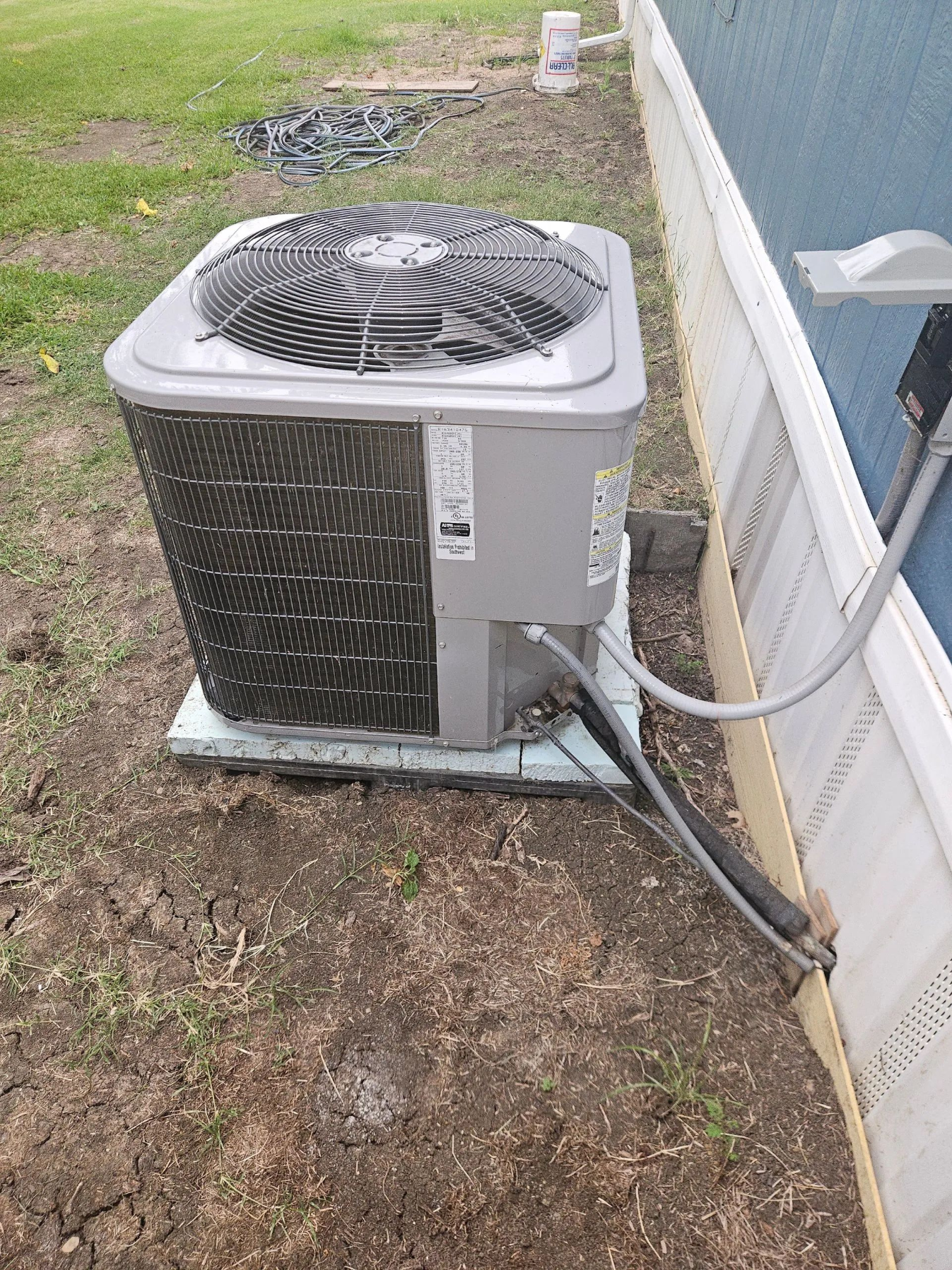
Find the outdoor unit’s data plate and record its model number. That number often indicates nominal equipment capacity, giving you useful information before discussing performance or replacement with a technician.
Ask For A Load Calculation, Not A Guess
When replacing equipment, ask a qualified contractor to measure the home, document windows and insulation, and explain the calculated result. A different recommended size should have a clear, measurable reason behind it.
Fix The House And The Ducts First When It Makes Sense
Improving insulation, sealing leaks, or repairing ductwork can sometimes reduce cooling demand enough for existing equipment to perform properly. Addressing those problems first may eliminate the need for unnecessary equipment replacement.
Plan Before The Next Heat Wave
Evaluate equipment before extreme summer weather arrives. Fall and winter provide more time to assess performance, address duct or insulation problems, and make informed replacement decisions without rushing during peak demand.
Quick Answer: Warm air from the vents during a heat wave usually traces back to one of a handful of causes: a thermostat set wrong or its fan switched to "on," a filter so clogged it has choked off airflow, an outdoor condenser unit that isn't running at all, a frozen indoor coil blocking airflow, low refrigerant, or a failed compressor. The first three are things you can check yourself in a few minutes. The last three usually need a technician, and running the system while ice is building on the coil or the compressor is straining can turn a repair into a replacement. Work through the checks in order, and you'll either solve it on the spot or know exactly what to tell whoever comes out.
You reach for the thermostat expecting relief and instead feel lukewarm, barely-moving air. Outside it's pushing triple digits, the kind of North Texas afternoon where an air conditioner has no business taking a break. Before you assume the worst, there's a short list of things worth checking, because more than one of them has nothing to do with a failing system and everything to do with a switch in the wrong position or a filter that's overdue.
What Low Refrigerant Actually Looks Like
The outdoor unit, the condenser, does the heavy lifting of rejecting heat from your home into the outside air. If it isn't running, nothing your indoor system does will produce cold air, no matter how clean the filter is. Stand near the unit and listen. You should hear the fan spinning and feel warm air blowing off the top. If the unit is silent, or if the fan is trying to turn but stuttering, that points toward an electrical problem rather than a refrigerant one.
A failed run capacitor is one of the more common reasons a condenser fan won't start, especially after the unit has logged hundreds of hours of runtime through a long cooling season. The capacitor gives the motor the jolt it needs to get spinning, and when it weakens, the fan can hum without turning or fail to start altogether. This isn't something to test or replace yourself, since the capacitor stores an electrical charge even when the unit is off, but recognizing the symptom, a humming or silent condenser with a warm coil, tells a technician exactly where to start.
Before assuming a bigger problem, check your breaker panel and any disconnect switch near the outdoor unit. A tripped breaker or a disconnect that got bumped or accidentally left off after previous service will stop the condenser cold and produce warm air throughout the house, with a fix that takes seconds once you spot it.
Refrigerant doesn't get "used up" the way fuel does. If a system is low, it's because it's leaking somewhere in the line set, the coil, or a connection, and it will keep getting lower until the leak is found and sealed. Low refrigerant produces a fairly recognizable pattern: weak or warm airflow that gradually worsens over days or weeks, ice on the indoor coil or the refrigerant line, and a system that runs longer than it used to without reaching the setpoint. It's a different pattern than the sudden warm air you get from a tripped breaker or a dead capacitor, since it tends to creep rather than hit all at once.
Confirming a refrigerant issue requires gauges and training a homeowner won't have on hand, so this is one of the checks you observe rather than diagnose yourself. What you can do is note when the warm-air problem started, whether it came on gradually or all at once, and whether you've noticed hissing or bubbling sounds near the indoor or outdoor unit, since that detail alone can point a technician toward a leak location faster.
Frequently Asked Questions
How can I tell if my AC is too big for my house?
Watch for short run times, a clammy feel even when the air is cold, and uneven rooms. Persistently high indoor humidity is the strongest clue, and a technician can confirm it by measuring the load.
Can an AC be too small if it is running all the time?
Yes, but constant running alone does not prove it. A dirty filter, clogged coil, low refrigerant, or leaky ducts can mimic it, so rule those out before comparing the home's load to capacity.
Is a bigger air conditioner better in the Texas heat?
Not usually. A larger unit cools quickly and shuts off before removing much moisture, leaving the house cool and sticky. It also cycles more often, adding wear, while steady run time handles humidity better.
What is a load calculation and do I need one?
A load calculation estimates how much heat and moisture your house gains on a design day, using windows, insulation, air leakage, ducts, and occupants. Do one before choosing any new system, so numbers replace guesswork.
Does adding insulation or windows change the size I need?
It can. Better attic insulation, sealed leaks, and efficient windows reduce the cooling load, so an improved home may need a smaller system. That is why a fresh calculation matters at replacement time.
Can variable speed equipment solve a sizing problem?
It helps with close calls. A variable speed or two stage system runs at lower output most days for longer cycles and better dehumidifying, then ramps up in peak heat. It still needs a proper calculation.
A Properly Sized AC Makes Summer Comfort Easy
The cool air arriving this fall is a gift for anyone who suspected their AC was not quite right during August. The system has had a long season to show you how it behaves. Short cycles, sticky air, rooms that never match, and a unit that works without rest are all clues that can be turned into a clear plan. Each one points back to the same question of whether capacity fits the house.
For 30
years, Moore Comfort Care Heating and Air Conditioning
has served homes in Midlothian, TX, and the pattern holds in nearly every house we visit. A properly sized system is not about the biggest number or the smallest bill. It is about matching capacity to a real home, with ducts and insulation that let the equipment do its job. When that match is right, you stop thinking about the air conditioner at all, which is exactly how it should be.